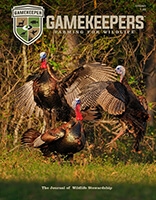

It seems that every back road I travel in my home state of Michigan; I see a turkey on the edge of a field. We literally have wild turkeys everywhere! Up until this year, during the fall turkey season, a hunter could legally shoot a turkey every day of the season as long as the hunter kept buying a license. This policy has changed for the 2025 season, and I suspect it has something to do with the nationwide decline in wild turkey numbers. Michigan’s turkey population is robust, but I believe that seeing what’s happening in many other states caused the Michigan Department of Natural Resources to start thinking proactively.
Across much of the wild turkey’s range, the picture isn’t nearly as rosy as what I see from my truck window in Michigan. States from the Southeast to the Great Plains reported measurable population declines that have wildlife biologists increasingly concerned. As a turkey hunter, that scares the heck out of me.
While quite a few states are sounding the alarm, not all the news is grim. In Minnesota, recent hunter success rates suggest the state may actually have more turkeys now than it did in 2021. This upward trend has prompted state wildlife officials to consider consolidating hunting zones—not due to declining populations, but to streamline data collection and improve insight into hunter effort and harvest distribution. Turkey population dynamics can be highly regional. What works in one place may not work in another, but without data, it makes figuring things out a whole lot harder!
From Rags to Riches: The Turkey Comeback Story
To understand what’s at stake, it helps to first understand how far wild turkeys have come. In the early 1900s, wild turkeys were nearly extinct in many parts of the United States due to overhunting and habitat loss. By mid-century, hunters finally started doing something about it.
Thanks to aggressive trap-and-transfer programs, funding from the Pittman-Robertson Act, and support from hunter-led conservation groups like the National Wild Turkey Federation (NWTF), wild turkey populations made an astounding comeback.
By the early 2000s, turkeys were thriving in places where they hadn’t been seen in a century. From the rolling hardwoods of Pennsylvania to the piney woods of Texas, and even into urban and suburban fringes, wild turkeys became a wildlife success story. Michigan was no exception. Birds released decades ago took root in state game areas, forests, and agricultural edges, thriving in a patchwork of habitat that had room for both man and gobbler.
But as the old saying goes, “What goes up, must come down.”

Rob Kinney
Going the Wrong Way
Somewhere around 2010, biologists and turkey hunters started noticing something strange. The upward trajectory in turkey numbers seemed to stall out. Then in some areas, it began to reverse. Places that once boasted healthy flocks suddenly saw fewer birds gobbling in spring or strutting in open fields. What was once a predictable morning of calling and hearing multiple birds gobble back began to feel a bit like chasing ghosts.
This wasn’t just anecdotal. State agencies started reporting measurable declines in turkey populations. States like Missouri, Arkansas, Mississippi, Alabama, and even parts of the Midwest like Iowa and Wisconsin began to show concerning trends in annual brood surveys and harvest data. Some states were down 20 to 30% in certain regions. Others saw localized declines of 50% or more.
Now, even the diehard turkey states in the South are showing troubling signs. Georgia has reduced its bag limits and season lengths. Alabama shortened its season and moved its opener back to reduce pressure on early-breeding gobblers. Tennessee followed suit. The trend is clear: the wild turkey is facing a downturn across much of its range.
What’s Causing the Decline?
The easy answer would be to point to a single culprit – perhaps habitat loss, or increased predation, or disease. But the truth is far more complicated. The turkey decline seems to be a perfect storm of several overlapping challenges.

Rob Kinney
1) Brood Success and Weather Patterns
What really drives turkey population numbers is pretty basic—how many young birds survive each year. Brood success is heavily influenced by weather. A string of cold, rainy nesting seasons are death sentences for young poults that rely on warm conditions and dry grass for insect foraging. Unfortunately, several key turkey-producing states have seen a string of unfavorable nesting seasons.
In Missouri, for example, back-to-back wet springs in the late 2010s led to far fewer baby turkeys surviving. Arkansas reported similar trends. Even one or two poor nesting seasons can cause noticeable dips in localized populations, and multiple years of bad luck can dig a hole that’s hard to climb out of.
2) Raccoons, Opossums, Skunks, Snakes, and Coyotes
Another factor often cited is an increase in predator populations. Nest and poult predators are more abundant than they’ve been in decades. Some biologists argue that our modern landscape, full of fragmented habitat and edge cover, actually favors predators like foxes, raccoons, and skunks.
Fewer trappers and fewer small game hunters mean predator control isn’t happening like it used to. Throw in increasing bobcat and coyote numbers, and you’ve got more nest raids and more hens getting harassed when they’re trying to nest.
But as Ryan Boyer, NWTF regional biologist for Michigan, Ohio, and Indiana, puts it: “If you don’t have the habitat, predator control won’t be the total answer.” This captures a fundamental truth about turkey management—you can’t trap your way out of a habitat problem because habitat for turkeys is also excellent habitat for their predators.
3) Habitat Changes
Habitat loss is a silent killer. While dramatic clear-cutting or urban sprawl gets attention, subtle changes in land use can have just as big an impact. The maturing of forests, decline in prescribed fire, woods getting too thick and brushy, and turning native grasslands into endless rows of corn and beans all affect turkey habitat. Turkeys need a mix of mature timber for roosting, open areas for bugging, and patches of thicker cover for nesting and brood-rearing. As that mixed landscape disappears, so do the birds.
4) Hunter Pressure and Bag Limits
Hunting pressure is increasingly part of the conversation. In states with liberal bag limits and long seasons, concerns have grown about overharvesting gobblers, especially mature toms early in the breeding cycle. Some studies suggest that heavy early-season hunting might disrupt the natural breeding process, causing hens to have reduced nesting success.
.To address this, many states have responded by reducing bag limits or delaying season openers. Alabama reduced its season from 45 to 30 days and limited the harvest to one gobbler per day. Tennessee shortened its season and reduced the number of allowable gobblers. Georgia implemented a two-bird limit and pushed the season opener back by ten days.
Michigan, while still relatively stable in turkey numbers, seems to be watching closely. The change in its fall turkey policy—eliminating the ability to shoot one turkey per day—was likely influenced by these national concerns. It’s a move that hunters may grumble about in the short term but could help maintain populations long-term.

Rob Kinney
5) Diseases
Another under-the-radar concern is the potential impact of diseases. While there’s no epidemic wiping out turkeys across the board, local issues like LPDV (Lymphoproliferative Disease Virus) have raised eyebrows. First identified in Arkansas in 2009, LPDV has since been found in wild turkeys across multiple states and is speculated to affect up to 80% of the wild turkeys in New York. The virus has also been found in wild turkey populations in Arkansas, Georgia, North Carolina, Pennsylvania, and West Virginia. While not always fatal, it can impact immune function and overall health. This may wind up being a big factor in regional population declines, but long-term studies have yet to happen.
Avian influenza has also emerged as a concern, with the first documented die-off of wild turkeys from bird flu occurring in Wyoming in 2022, where 41 birds were found dead. While such cases remain rare in wild turkey populations, the virus’s ability to cause rapid mortality when it does strike makes it worth monitoring.
While we don’t yet know how much of a role disease plays in the current decline, its potential impact shouldn’t be ignored.
The Role of Conservation and the Road Ahead
With all this gloomy talk, you might think the wild turkey is on the brink again. But let’s pump the brakes a bit. This isn’t the 1920s. We’re not looking at extinction. We’re looking at a correction.
Wild turkeys were perhaps the greatest conservation success story of the 20th century. But the foundation that got us here—good habitat, engaged hunters, and smart management—must continue into the 21st century. States that invest in habitat improvement, predator research, disease monitoring, and thoughtful season frameworks will be the ones that sustain turkey populations for generations to come.
Organizations like NWTF are once again leading the charge, launching initiatives like “Save the Habitat. Save the Hunt.” which focuses on conserving four million acres of habitat. Meanwhile, researchers are digging deeper into turkey nesting habits, population trends, and how to manage landscapes specifically for wild turkeys.
How Hunters Can Help
Hunters have always been at the forefront of wildlife recovery, and the wild turkey’s future is no different. We’ve long prided ourselves as stewards of the resource, but we can’t sit this one out. We owe it to these fine birds to be responsible. That means supporting science-based regulations, reporting our harvests accurately, participating in brood surveys, and promoting ethical hunting practices. Some hunters are voluntarily limiting their own harvest to ensure local populations aren’t over-pressured.
One of the simplest and most impactful things a hunter can do is report your harvest. For years, Michigan didn’t require turkey harvest reporting – after all, the population was strong and the data seemed stable. But now, with trends turning downward nationwide, accurate data is more critical than ever.
Some hunters grumble about the extra step, but these reports give biologists the real numbers they need to track population changes, gauge hunter success, and make science-based management decisions. It’s not a burden – it’s a responsibility.
I remember reporting my turkey harvest back in 1979 when Michigan’s program was still growing. I had to make a 45-minute drive to a DNR check station just to show them the turkey and get a tag proving I complied. Now that the pendulum may be swinging the other way, electronic reporting seems like a breeze compared to what we went through, so it’s time we take it seriously again.
Another way to help? Consider predator control. Reducing nest predators like raccoons, skunks, opossums, and coyotes by hunting and trapping them can give turkey nests a fighting chance. Better nesting and brood-rearing habitat is crucial, but it means little if every nest gets raided. A balanced approach of habitat work, harvest reporting, and predator control may be our best shot at keeping turkey populations sustainable for successful hunts.
A Cautious Optimism
So where does that leave us? On my drives through Michigan’s countryside, I still see turkeys. I still hear gobbles in the spring woods. But I also know that what I see today isn’t guaranteed tomorrow.
My state has taken a small but important step in changing its spring and fall harvest rules. It now requires e-verification for all successful hunters – exactly the kind of data collection that helps biologists make smart decisions. It’s a sign that we’re watching, that we care, and that we’re not going to wait until it’s too late.
In many ways, the turkey’s current plight mirrors its past and complacency is the enemy. What took decades to rebuild can be chipped away in just a few years if we’re not vigilant. With smart management, habitat work, and engaged hunters, it can weather this storm too, so let’s not take that for granted. After all, the gobble in the spring woods isn’t just a sound. It’s a legacy, and it’s worth protecting.
-
Join our weekly newsletter or subscribe to Gamekeepers Magazine.
Your source for information, equipment, know-how, deals and discounts to help you get the most from every hard-earned moment in the field.